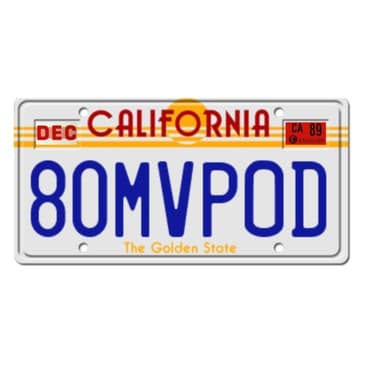
On this episode, we discuss one of the biggest hit films ever in Australian cinema, that was pretty much ignored in the rest of the world, Yahoo Serious' Young Einstein.
----more----
Yes, you read that right. Yahoo Serious was the name of the director of Young Einstein.
And its main star.
And it's co-writer, co-producer, supervising editor, and he even wrote and sang a song or two on the soundtrack. A true modern renaissance man.
We also have a brief history of Australian cinema, the 1970s New Wave of filmmakers like Gillian Anderson, Bruce Beresford, George Miller and Peter Weir who would put Australia on the global cinematic map once and for all, and a scrappy art school student would make, and then remake, himself and his debut movie.
If you like what you hear and you haven’t done so already, please make sure to rate and review the show on your favorite podcatching source. While a good review and rating won’t increase our chances of being found or being a featured podcast on a podcatcher like Apple Podcasts or Spotify, it will potentially help increase the odds of someone who does find the show for the first time thinking that clicking play will be a good time investment for them. And it’s something you can even do while you’re listening to this episode.
On this episode, we’re going to shine a light on one of the most unique talents to come from a land down under. So go ahead and throw another shrimp on the barbie, as we look back at the comedic genius known as Yahoo Serious and his first movie, Young Einstein.
How a major American distributor like Warner Brothers came to distributing a quirky little Australian comedy like Young Einstein, one needs to travel back in time to the mid 1970s. Actually, a lot farther back than that.
The Australian film industry had been around almost as long as there had been a film industry.
The first film to be made in Australia, in 1906, was, naturally, about the notorious Australian bushranger Ned Kelly and his gang, and at the time of its making, the longest movie to be made, the first film to run an hour in length. Over the next several decades, a few Australian actors would become stars in Hollywood, notably Errol Flynn and Rod Taylor, but most of the films shown in theatres nationwide, up to 95% in some years, were imported from Hollywood. Even the casting of Australian actor George Lazenby as secret agent James Bond in 1968 did little to help the Australian film industry find a foothold in the global movie discourse.
This would start to change in the early 1970s, when the Prime Minister of Australia, John Gorton, initiated several forms of government support for film and the arts, including the Australian Film Development Corporation. His successor, Gough Whitlam, would strengthen their support for the national film industry, turning the Australian Film Development Corporation into the Australian Film Commission, whose missions included promoting the Australian film industry around the world and funding local productions, including movies and documentaries for and by indigenous peoples.
This would set off what is now known today as the Australian New Wave. Between 1970 and 1985, thanks to the Australian Film Commission, more than 400 movies were made in Australia. More films in a fifteen year period than had been made in the nation in the previous seventy years.
Filmmakers like Bruce Beresford and Peter Weir were able to get their earliest efforts like Beresford’s 1972 comedy The Adventures of Barry McKenzie and Weir’s 1974 horror comedy The Cars That Ate Paris made with budgets of less than a quarter million dollars. These movies, alongside Weir’s 1975 drama Picnic at Hanging Rock, Phillipe Mora’s 1976 drama Mad Dog Morgan and his 1977 mystery drama The Last Wave, would not only start to get play on the world stage, it would bring world class actors like Richard Chamberlain and Dennis Hopper to Australia to make Australian movies.
But it would be a pair of movies from first time filmmakers that would send the Australian film industry to the next level of global prestige.
Gillian Armstrong's My Brilliant Career, based on a turn of the century Australian novel, would introduce the world to the brilliance that is Judy Davis and Sam Neill. Davis starred as Sybyella, a young woman in rural, late-19th-century Australia who aspires to become a writer, only to find her efforts impeded by her social circumstances, and a budding romance with a childhood friend played by Neill. The $850k production would make more than $10m worldwide.
And while that would be one of the best-performing Australian movies worldwide, it was nothing compared to what the debut film by a would-be doctor turned filmmaker would do.
Certainly, no one was expecting much from a $400k post-apocalyptic dystopian action film starring an unknown actor. But George Miller’s Mad Max would become a smash hit, grossing more than $100m worldwide, and make a global star out of its lead actor, Mel Gibson. In the United States, the film would gross $8.5m, and become the final hit film for the venerable B-movie distributor American International Pictures before it was sold to Filmways Pictures, which itself would soon be bought by Orion Pictures.
The success of these two films around the world, and especially in America, would drive a flood of American distributors to start buying up Australian movies for release. Bruce Beresford’s Breaker Morant, Peter Weir’s Gallipoli, Richard Franklin’s Roadgames, and George T. Miller’s The Man From Snowy River would all find various levels of success both at the box office, both at home and around the world. But since the United States is the engine that drives the global movie sphere, the Australian film industry would get another major shot in the arm when George Miller’s sequel to Mad Max was released in the United States in 1982, under the title The Road Warrior.
The Australian film industry would suffer a small setback when many of its more successful directors, like Gillian Armstrong, Bruce Beresford, George Miller, and Peter Weir, started making movies in America, but that would only give other Australian filmmakers opportunities to get noticed.
Russell Mulcahy, Philip Noyce, Fred Schepisi, and Simon Wincer would start to break through to global audiences in the second wave of the Australian New Wave. But it would be a television director making his feature debut with a local television star that would drive the next wave of Aussie film success around the world.
Peter Faiman’s Crocodile Dundee would become the highest-grossing film in Australia when it was released in theatres in April 1986, and become the highest-grossing Australian movie both in the United States and around the world in the fall of 1986. So, naturally, the shift was on. Studios would stop looking for Australian dramas to release, and start looking for Australian comedies.
One person who would benefit from this new power dynamic was a young Australian art school student who had been shopping around his first movie. Born Greg Pead in a small town about an hour and a half north of Sydney, he would create a new persona at art school, where he would adopt the moniker, Yahoo Serious. With a penchant for wearing 60s-style clothing like black checks and pink paisleys and a hairstyle that would suggest The Bride of Frankenstein got caught in a hurricane, Serious originally wanted to be an artist in the Marcel Duchamp/Andy Warhol deconstructionist mode but would realize there was a much bigger canvas he could work on.
“I remember having a cup of coffee and I went, 'Well, look there is a giant canvas in every little town everywhere around the world,” he would tell a writer for the New York Times just before the American release of his first movie, “and on this giant canvas there are 24 frames of image on that screen every second and it's the most wonderful living art form.” A wonderful collusion of painting, music, literature, acting, theater and photography, and he wanted to be a part of it.
He would start to study cinema in the early 1980s, and observed over a several-year period that many of the directors he was drawn to were also their own editors or got their start as editors, so he would shoot short films just so he could learn about editing. In 1985, Serious considered shooting a concept trailer for an idea he had called Young Einstein, a comedy he envisioned that made the world’s most famous German theoretical physicist and turned him into the son of a Tasmanian apple farmer who comes up with the theory for mass-energy equivalence, you know, E=MC2, as a formula for splitting beer atoms to create bubbles in beer. Along the way, Young Mr. Einstein would meet and fall in love with Marie Curie, invent rock and roll, and head to Paris to stop a patent office manager who has stolen Einstein’s beer bubble discovery from accidentally blowing up the world while accepting a Nobel Prize from Charles Darwin.
But he would end up raising $2.18m from the Australian Film Commission to make the actual movie. Yahoo Serious was so certain about his vision for the film that he would not only direct the film, not only co-wrote the screenplay, not only star as the title character but also act as one of the producers and editors. That’s a lot of hats to wear on your first feature film.
For seven weeks in the fall of 1985, Serious and his ragtag cast and crew would travel all across Australia, from the Northern Territories to New South Wales, but, ironically, not in Tasmania, where a good portion of the story would take place.
The details about how the filming went are scant, as the film was an independently-made film by a bunch of first-timers. Amongst the most seasoned people working on the film was the actress Lulu Pinkus, whose biggest role to date had been as one of Toecutter’s gang in the original Mad Max. She and Serious would fall in love during the making of Young Einstein and would marry in 1990. But they would complete shooting in early November 1985, and Serious spent the next six months working with his editors to get the film ready for release.
Now, here’s where the story gets weird.
Seriously weird.
Pun very much intended.
Yahoo Serious and his team had the film completed in time to enter it into the 1986 Australian Film Institute Awards, where it would be nominated for Best Cinematography, Best Original Screenplay, and Best Sound, and would win for Best Original Music Score, even though by the time the awards ceremony happened on October 31st, the film hadn’t opened in theatres.
Village Roadshow Pictures, the biggest film distributor in Australia, had originally planned on opening the film in February 1987. But after the success of Crocodile Dundee in America, Village Roadshow head Graham Burke approached the American distributor Warner Brothers about buying the American rights to the film. Village Roadshow and Warner Brothers had worked together for many years on many different kinds of movies, including Sergio Leone’s Once Upon a Time in America, Stanley Kubrick’s Full Metal Jacket, and Sidney Lumet’s Dog Day Afternoon. Terry Semel, the President of Warner Brothers Pictures, and Richard Fox, the head of Warner Brother International, would embrace the film’s concept and would give Burke $3m to not only acquire the American distribution rights to the film but also allow Serious and his team to go back and reshoot a good portion of the movie, to make it look more polished and accessible to non-Aussie filmgoers.
Again, there aren’t a whole lot of records about the reshoots, but what there is out there states that the new round of shooting happened in the late fall of 1987, and that about an hour of the film, roughly two-thirds of it, was reshot.
The extra money from Warner Brothers would also allow the filmmakers to travel to California to remix the sound at the Saul Zaentz Film Center in Berkeley, which was considered by many filmmakers to be the second-best facility to mix movie soundtracks, after George Lucas’s Skywalker Sound studios in nearby Nicasio CA, as well as procure a number of songs from a number of top Australian new wave and post-punk bands including Big Pig, Icehouse, Mental as Anything, and The Saints.
Village Roadshow would finally release the film into two dozen cinemas in Sydney and Melbourne on December 15th, 1988, more than three years after they had finished filming the first version of the film. And while there’s always been a sense of pride in Australia for locally-made films by their fellow countrymen, no one expected just how big the movie would open, especially on the weekend before Christmas, which was traditionally a dead week for local cinemas. Despite opening in less than forty theatres, Young Einstein would gross $1.26m in its first seven days in Australia, the fifth biggest opening week in all of Australian cinema history, only behind Fatal Attraction, Rocky IV, and the first two Crocodile Dundee movies.
Blown away by the immediate response from theatergoers, Village Roadshow would spend most of that first week rushing to print up nearly a hundred more 35mm film prints of the movie, to meet the demand of theatres across the nation who wanted to be a part of the hottest new thing in Aussie film history.
After five weeks of release, the movie had grossed $8.2m, and the film’s success had sent the accompanying soundtrack into the Top Ten on the Australian record charts. When the film was finally played out in Oz, it had grossed more than $13.3m, which might not sound like a whole lot, but it would be firmly ensconced in the top ten highest-grossing films in Australian film history.
Not of Australian films specifically.
Of all films ever released in Australia.
Nearly one in five Australians saw Young Einstein in theatres in late 1988 and 1989. That would be the equivalent of 46m people seeing a movie in theatres in America. If 46m Americans had seen Young Einstein in theatres when it was released in August 1989, at an average ticket price of $3.99 at the time, the film would have grossed about $184m, which would have put it third on the box office charts for the year, more than any other movie released that year outside of Batman and Indiana Jones and the Last Crusade.
Except, that didn’t happen.
The film would finish its American theatrical run with $11.5m, good enough for 82nd place for the year.
That would be higher than Dead Calm, the Phillip Noyce-directed Australian thriller with Sam Neill and Billy Zane, that would make Nicole Kidman a star in America, and put her on Tom Cruise’s radar as a potential co-star in his NASCAR movie Days of Thunder. More than Kenneth Branagh’s Henry V, which would be nominated for three Academy Awards including Best Director and Best Actor for Branagh. More than Drugstore Cowboy, the film that would make Gus Van Sant’s career.
But could it have been higher?
Warner Brothers would spend a good portion of 1989 and more than $8m promoting Young Einstein and its star. Time Magazine would feature Yahoo Serious on its cover in February, a full six months before the movie would be released in America. The following month, he would interview himself for 60 Minutes. He would be interviewed by Jay Leno on The Tonight Show in July, two weeks before the film opened. Leno was guest hosting that week for the vacationing Johnny Carson. He would have his own show on MTV during the summer of 1989. And, in the ultimate sign that someone had made it at the time, Serious and his movie would get parodied on the pages of Mad Magazine.
But the truth of the matter was that the film was probably too Australian for international audiences, and it definitely opened at the wrong time.
Most American critics hated the film, including Roger Ebert, although Caryn James of the New York Times would note in her review of the film that Serious was a much more adept filmmaker than the loony plot of the movie would suggest. And early August was too late in the summer season for a movie like Young Einstein. But to be fair, even the Sylvester Stallone movie Lock Up, which opened the same day as Young Einstein, failed to do as much business as one would have expected from a Stallone movie. While the film never lived up to the studio’s expectations, and to this day retains the albatross of “bomb” around its neck, Young Einstein would be a profitable film for all involved, having grossed more than $33m worldwide, a far better return on the investment than most movies ever made.
I still remember the first time I saw the film. In July 1989, I was 21 years old, and I was a first-time movie theatre general manager, of a dollar house in San Jose CA. I’m not going to go into too much detail about it, as I did an entire episode about it last summer, suffice it to say that theatre managers of dollar houses rarely got called up by studios and invited to special preview screenings. But one day, I did get a call from the local Warner Brothers publicity rep for the Bay Area, inviting me up to come to watch the movie at the UA Galaxy 4 Theatre in San Francisco, a beautiful $7m theatre at the corner of Sutter and Van Ness.
After the movie, all of us who attended the screening were given a boatload of swag, including posters for the film, which I already had at my theatre, CD copies of the soundtrack, a Young Einstein t-shirt, and a really cool plastic beer mug that glowed in the dark after being exposed to light. Quite frankly, it was the first time I had ever received any kind of movie swag, and I instantly got why people love to get movie swag.
Yahoo Serious would make two more movies after Young Einstein, as star and writer and producer, and director. 1994’s Reckless Kelly would take the oft-told story about the notorious 1890s Australian bushranger Ned Kelly, their answer to Butch Cassidy, and bring him into the modern day, while 2000’s Mr. Accident would find Serious as a man who, along with his UFO-obsessed girlfriend, discovers a plot by his boss to sell eggs that are laced with nicotine.
Like Young Einstein, Reckless Kelly and Mr. Accident would be huge hits in Australia, and virtually ignored in the rest of the world.
After the release of Mr. Accident and an appearance at the opening ceremonies for the 2000 Sydney Olympics, Yahoo Serious would start to fade from the public. His website, YahooSerious.com, is still active to this day, although it hasn’t been updated since 2000. But despite his status as an 80s movie icon, there’s still quite a bit of interest in Yahoo Serious, at least in Australia.
In fact, it would be national news for the Australian version of the British tabloid The Daily Mail when Yahoo Serious was seen out on the streets of a Sydney suburb in 2017, the first time anyone in the press had seen him in public since 2007 and would become news again in 2020 when he was seen again by reporters for the Daily Mail for the first time since 2017. Not that it should have been that hard to find him. He lives a quiet life near the Sydney suburb of Palm Beach, where he enjoys going to the beach with his Jack Russell terrier. He would split from his wife Lulu in 2007, but that wouldn’t become known until three years after the fact. And, to be honest, considering he’s nearing 70, he’s still in the same svelte shape he was when he first started filming Young Einstein 37 years ago from the photos taken of him at the beach.
Young Einstein is a stupid and silly film, and if you open yourself up to the experience, a hell of a lot of fun. The cinematography is, as one would expect of an Australian movie, quite exceptional. Yahoo Serious wasn’t movie-star handsome like Tom Cruise or even Michael Keaton, but he had a light and breezy on-screen presence that could have given him a bigger career if he were to open himself up to outside collaborations. So if you’ve never heard of it or have heard of it but never given it a chance, it’s barely 90mins long, and you just might discover a little hidden gem. As of June 2022, you can rent the 91min American theatrical version of the film for $2.99 from a number of streaming sources including Apple TV, Amazon, Google Play, and YouTube.
Or you can look for it for free on a popular internet archive website, where what looks like an edited 84min pan and scan version of the film taped off Australian television can be found. You’re better off getting the 91min version that’s shown in its proper 2.39:1 anamorphic widescreen aspect ratio.
Thank you for listening. We’ll talk again soon.
Remember to visit this episode’s page on our website, FilmJerk.com, for extra materials about the movies we covered this episode.
The 80s Movies Podcast has been researched, written, narrated, and edited by Edward Havens for Idiosyncratic Entertainment.
Thank you again.
Good night.