Follow Serial Napper on iHeartRadio - https://ihr.fm/3I9quYM
Follow on Apple Podcasts - https://apple.co/3t9HoCI
Follow Everywhere Else - https://bit.ly/3q1OF5p
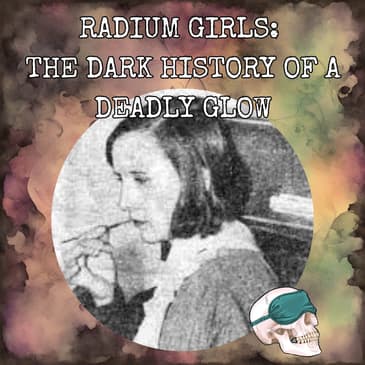
Known as the "radium girls", these brave young women would go up against some of the biggest companies in North America at the time, fighting for justice and changes in labour laws. Sadly, many of them would never live to see the positive impact they made. The story of the radium girls is both tragic and an important lesson on corporate greed.
► YouTube - https://www.youtube.com/@SerialNapper/
► Twitter - https://twitter.com/serial_napper
► Instagram - https://www.instagram.com/serialnappernik/
► Facebook - https://www.facebook.com/SerialNapper/
► TikTok - https://www.tiktok.com/@serialnappernik
~~~~~~~~~~~~~~~~~~~~~~~~~~~~~
You can find Indie Drop-In at https://indiedropin.com
Help Indie Drop-In support indie creators by buying us a coffee!
https://buymeacoffee.com/indiedropin
Brands can advertise on Indie Drop-In using Patreon
https://patreon.com/indiedropin
Twitter: https://twitter.com/indiedropin
Instagram: https://instagram.com/indiedropin
Facebook: https://facebook.com/indiedropin
Any advertising found in this episode is inserted by Indie Drop-In and not endorsed by the Creator.
If you would like to have your show featured, go to http://indiedropin.com/creators
~~~~~~
]]>
[00:00:00] Listener discretion is advised. Hello and welcome to True Crime, the podcast that helps you find new emerging and undiscovered True Crime podcasts. I'm Greg, the host and curator of True Crime. I hope everyone had a great holiday and a great 2023.
[00:00:15] Well now it's time to get back to work and get started on 2024. True Crime by Indie Drop-In is back with a True Crime episode every week. I don't know what kind of New Year's resolutions you made, but I'm sure the podcasters you're
[00:00:30] about to listen to has made a resolution to grow their show. So one amazing thing you could do to help this year is just tell somebody about a show you've heard on True Crime by Indie Drop-In right here.
[00:00:41] You can tell them to listen to this show or you can point them right to the show that you like. Anyway, today's episode is by Serial Napper. Do you enjoy falling asleep listening to True Crime podcasts?
[00:00:56] And you'll love Serial Napper, an international True Crime podcast hosted by Nicky Young. If you liked today's episode, make sure to check out the episode description for links to subscribe. Alright, let's get this show started. Begin!
[00:01:29] Hey everyone, my name is Nicky Young and this is Serial Napper, an international True Crime podcast. I'm back with a third Serial Nightmare episode of 2023. If you're a new listener, let me catch you up.
[00:01:44] Serial Nightmare is a Halloween series that I do every year for the month of October. So everything that I release this month will either be Halloween related or a little bit more on the spooky side, but of course, always True Crime.
[00:01:58] Tonight, I'm talking about the experience of hundreds of girls who innocently signed up to work in clock factories hoping to generate money to feed their families and to help on the home front during World War I.
[00:02:13] They used luminous paint made of radium on the clocks and dials, getting it onto their clothing, on their skin and even in their mouths. Yet, they had no idea that radium was toxic and the substance that they worked with every
[00:02:30] day was literally eating them alive from the inside out, not until it was far too late and many of these young ladies began to experience absolutely gruesome symptoms and side effects. Known as the Radium Girls, these brave young women would go up against some of the biggest
[00:02:51] companies in North America at the time, fighting for justice and changes in labor laws. Sadly, many of them would never live to see the positive impact that they made. The story of the Radium Girls is both tragic and an important lesson on corporate greed.
[00:03:11] So let's jump right in. Now we're going to put on our science hats and briefly talk about how radium was discovered all the way back in 1898. I'm not even going to pretend like I understand all of the terms and methods that are
[00:03:26] involved with finding and isolating radium, but I'll do my best. A married couple of physicists by the names of Marie and Pierre Currie discovered this new element known as radium from Mines in Bohemia, and they were absolutely in awe by the way that it glowed in the dark.
[00:03:47] Marie, who was again a scientist, would even refer to it as beautiful radium, and it was beautiful. It gave off this light green luminescent glow, which was actually caused by a chemical reaction when the radiation met with the air.
[00:04:05] Marie worked tirelessly in a dilapidated shed that had basically no windows and no ventilation. It was a lot of work gathering the metals and ores and then going through the process of isolating the radium.
[00:04:21] This said that four years into her efforts, she had barely enough radium to fill a thimble, but this didn't discourage her. She knew that she had something really special, something that could alter the way that we live forever, even if it was radioactive, a term which Marie coined.
[00:04:44] While working with the radium, both Marie and her husband Pierre would suffer from very serious health ailments. The substance gave them chemical burns on their skin and they became severely fatigued. Their symptoms only grew worse with every exposure to the radium.
[00:05:03] While there was a pretty clear connection between their research and their side effects, they mostly just chose to ignore it. The discovery of radium and its radioactive properties was one of Marie Curry's biggest accomplishments in life, and her thesis on her research has been described by some professors
[00:05:23] as the greatest single contribution to science ever written. When the world began to learn about radium and all of its potential uses and benefits, companies began to find ways that they could incorporate this new element into their products and cash in big.
[00:05:42] People were captivated by the way that it glowed, and it was touted as a miracle substance. Health and wellness companies began to market radium as a cure-all for ailments like asthma, blindness, and low sex drive.
[00:05:58] Beyond that, radium was included as an ingredient in many common household products like toothpaste, cosmetics, and even tonics that you would drink. There was even an issue with companies basically lying on their packaging and in their marketing
[00:06:14] about using this new miracle ingredient in their products when they actually contained no radium at all. That's how desirable this stuff was. Radium was most commonly used in clocks and watches. The radium would be turned into a paint, which would illuminate the numbers on watches
[00:06:35] so that people could tell time even in the dark. Factories began to pop up all across the US and Canada, hiring thousands of workers, mainly young women, to paint these clocks with that luminescent radium.
[00:06:51] It was a really great gig because these types of jobs typically paid much better than other factory jobs and I'm talking as much as three times the pay. This was the job that every young lady wanted, giving them financial freedom that they always dreamed of.
[00:07:08] So of course, anytime a job opportunity came up, they'd tell all of the other young ladies in their life that they had to apply. When World War I was declared, the military bought a contract with these factories to
[00:07:21] paint light-up wrist watches for their soldiers as well as to paint the dials in their airplanes so that the pilots could see their dashboards in the dark much better. This just added to the reasons why women were seeking out this particular job.
[00:07:37] This was their opportunity to help with the war efforts from the home front. It was their chance to earn money for their family in really difficult economic times, but to also do something to help their men who were fighting overseas.
[00:07:51] Those who were hired were typically young women with steady hands and an ability to paint fine details. Some of the faces of these watches that they were painting were only 3.5 cm wide, so the numbers on them were very tiny.
[00:08:08] Just like with any other paintbrush, after you use it, it tends to lose its shape. So to keep that fine point at the end of the brush, the women were instructed to use a technique called lip pointing, where they would put the brush between their lips
[00:08:24] to reshape the point. This allowed them to keep using their brush to make the perfect fine point and to create the smallest of brush strokes. Some of these girls were painting as many as 200 watches every day, and each time
[00:08:39] they slipped the paintbrush into their mouth, they would swallow a bit of the radium paint, making their teeth glow a bright green. But according to the factory executives, there wasn't anything to be concerned about. Radium was a miracle element.
[00:08:57] If anything, these ladies should be appreciative to have such a lucrative job where they were working with such high quality ingredients that were even beneficial to their health. And it's true, many women wish to work at these factories, simply for the fact
[00:09:12] that they got to be involved with such a fashionable industry. Of course, during their onboarding, they would ask their managers if this substance, known as radium, was dangerous to their health. There had been murmurings that it could be toxic.
[00:09:30] In fact, Marie Currie, who discovered radium, she had written about the side effects that she had experienced after handling the element, including suffering from chemical burns all over her hands and her arms, basically anywhere that it touched her skin.
[00:09:47] And over the years, there had been multiple deaths reported as a direct result of radium exposure. But there was a lot of money to be made in radium-related products. So these big companies, they would pay for their own independent market research,
[00:10:05] quote unquote, that would state small amounts of exposure to radium is perfectly safe, even beneficial to a person's health. Heck, it would even add ears to your life. Yet the men working in these same factories who were also exposed to radium,
[00:10:21] they were given lead aprons to protect their bodies and they used tongs to handle the element instead of exposing the radium directly to their skin. Meanwhile, when these girls asked if their health was at risk by handling
[00:10:36] the radium, they were assured that the small amount that they were working with was completely safe. And again, it would even add ears to their lives and a bit of color to their cheeks. You're listening to an episode of Serial Napper on True Crime by IndieDropin.
[00:10:53] We're going to take a quick break. And now back to this episode of Serial Napper. It was difficult to argue with all of the research and the marketing materials that these companies were distributing. So most women felt comfortable enough to take the job. Plus, it was great money.
[00:11:12] When the ladies finished their shifts painting hundreds of watches, sometimes they would find that they glowed as brightly as the watches that they had painted that day, earning themselves the nickname of Ghost Girls. And they fully embraced this nickname.
[00:11:29] It was kind of a badge of honor, a sign that they had a great paying job. One of the top 5% in the US for female workers, actually. So they would even put it on their teeth and then go enjoy a night out after working,
[00:11:45] having no idea that the substance that was making them glow was also killing them from the inside out. One of the first radium girls to die as a result of the exposure was a young woman named Molly Maggia.
[00:12:01] One day, Molly suddenly became very ill with a terrible toothache. The pain was so bad that she had to quit her job at the factory altogether. She went to the dentist to have this tooth extracted,
[00:12:16] but it wasn't long before the tooth next to it began to hurt the very same way and would also need to be pulled. When the dentist dug in, he saw a very clear problem.
[00:12:27] Underneath where the teeth had been pulled were these ulcers that were full of blood and pus. The wounds had never healed. Instead, they had pretty much fused together and then became infected, with the infection then spreading to other parts of her mouth, her face, and her neck.
[00:12:46] When the dentist tried to surgically remove the infected ulcers, he found that Molly's jaw had completely deteriorated to the point where he could literally push his finger into the bone and it would just crumble and fall apart. Her whole jaw was disintegrating just by touching it.
[00:13:14] A few days later, a doctor would remove the remainder of her jaw just by manually removing these pieces from her mouth. The radium had created little holes in her bone and it basically shredded them from the inside out, so it all just fell apart.
[00:13:31] Not only is this really disturbing to think about, but Molly was also in unimaginable pain. She couldn't talk and then soon enough it spread so far to her body that she couldn't even walk. She died in 1922 at just 24 years old due to a massive hemorrhage.
[00:13:50] Yet no one at the medical examiner's office linked her death to radium exposure. Instead, her death was attributed to syphilis, an STI, which seems like the biggest slap in the face. Molly would be one of the first to suffer a horrible gruesome death,
[00:14:07] but she certainly wouldn't be the last. Other girls at the factory were also getting sick with really serious symptoms. Their hair was falling out, their teeth were just crumbling, they were developing these large tumors all over their bodies, and their bones and their spines were fracturing and collapsing.
[00:14:29] They were developing cancer on their skin and in their mouths, in their throats at an alarming rate. By 1927 more than 50 of these women had died horrible painful deaths. But factories like USRC continue to ignore the fact that their employees were getting really sick
[00:14:49] and instead of actually helping to limit their exposure to the radium, they focused their resources on putting out new market research that highlighted how safe the metal was. All of this despite the fact that reported illnesses continue to flow in
[00:15:06] and other independent studies not funded by the factories reported the very opposite, that radium was incredibly hazardous to handle. The CEO of USRC, where most of these young women worked, would publicly go on the record saying that all these women claiming to be sick were lying.
[00:15:25] And their illnesses? Well, they were completely unrelated to working at the factory. They were now just trying to cash out so that they could pay their medical bills. These women were trying to fight an uphill battle against a very wealthy company
[00:15:40] that had all of the resources in the world to crush them. Beyond that, this is in the early 1900s when the world was incredibly sexist. No one was taking anything that these women were saying seriously despite mountains of medical reports that showed that they were suffering
[00:16:00] horrendous side effects from radium. One of the men at the factory would come forward and report that he was really ill from radium exposure and then people finally began to listen, including a doctor named Harrison Martland. Dr. Martland believed that repeated exposure to radium could have dire consequences
[00:16:21] and he set out to prove it, starting with Molly Maggia's death, which had been ruled as syphilis. He had another more competent medical examiner take another look at Molly's body and this examiner ruled that she had actually died to
[00:16:39] radiation exposure. She didn't have any signs of syphilis, that was clearly some kind of smear campaign. Instead the radium had eaten away at her bones until she could no longer survive the destruction. Even Pierre Currie, one of the scientists who discovered radium,
[00:16:57] he once said that he wouldn't want to be in a room with a kilo of pure radium because it would likely burn skin from his body, make him blind and then ultimately kill him.
[00:17:08] Since Molly's death, even more women who had once worked in these factories continued to get sick and die including Irene La Porte who perished after suffering from a pelvic tumor that was described as bigger than two footballs. Many of the radium girls who were now battling
[00:17:29] just horrific illnesses and had only a short while left to live, they decided that they were going to band together and take on the factory that they had worked at, USRC. They weren't really doing it for themselves. They were already on borrowed time and they weren't
[00:17:46] expected to live much longer but they were doing it for the women who were still working in the factories and still being newly hired while also being lied to about the risks.
[00:17:59] One of these women who led the charge was Grace Fryer who was just 18 years old when she started working at the United States Radium Corporation, USRC. With the help of four other radium girls,
[00:18:12] they worked tirelessly to find a lawyer who would take on their case and this was actually really difficult because it would be a really big legal battle with a huge corporation and many
[00:18:25] attorneys simply were not up for it. In 1927, a lawyer by the name of Raymond Berry agreed to take the case. These women were dying from their illnesses so it felt like it was a race against
[00:18:39] time to try to get them some sort of justice. When the story of the radium girls began to circulate, their names and faces were on the front page of every local paper. Other young
[00:18:51] women who were still working at the watch factories, they were learning in real time that they were in very real danger working with such a complicated element. One young woman named Catherine Wolfe
[00:19:05] who worked as a dial painter would say quote, there were meetings at our plant that bordered on riots. The chill of fear was so depressing that we could scarcely work and I can't imagine you're working at this factory, you're making great money, money that you desperately need.
[00:19:23] You're hearing from your managers, your bosses that it's perfectly safe but then you're hearing of women who are literally falling apart after being exposed to this product. By the time the case of the radium girls finally went to trial, the five women represented were only given
[00:19:41] about four months left to live. They were able to settle outside of court for a small amount of money but none of the women lived any longer than just two years after reaching that settlement.
[00:19:53] But more important than the money was the fact that they were making the public aware of what was happening behind these factory doors. More women would come forward to fight for their own justice, including a dial painter by the name of Catherine Wolfe who would testify
[00:20:11] against the factory from her deathbed. Ultimately she would die with a tumor on her hip that was the size of a large grapefruit but she would have her voice heard and she would win her case.
[00:20:24] There would be many other cases won but much of the money was used on medical bills and to pay for the funerals of the women who were affected. It was a very somber win
[00:20:36] but word was getting out and that was the point. There was no way that the true effects of radium on the human body could be ignored any longer. The women who worked as dial painters refused to
[00:20:49] continue any further unless changes were made and changes they were coming, putting the responsibility of safety in the workplace right on the shoulders of the employer. This would become extremely important in an age where words like radiation and nuclear were about to become front
[00:21:10] and center on the world stage. The case of the radium girls even led to the creation of organizations like OSHA, the Occupational Safety and Health Administration and ultimately they probably saved a lot of lives as products that once advertised the glowing benefits of radium
[00:21:29] they were pulled from the shelves. Today there are still a handful of household products that contain radium like anything granite but after extensive research and studies it's just a trace amount
[00:21:42] that is considered to be safe as far as we know. One of the oldest surviving radium girls was Mae Keen who died at 107 years old. You might be wondering how she managed to live such a
[00:21:57] long life after being exposed to radium. Well early on after starting her job as a dial girl responsible for painting the radium onto the watch faces she decided that she didn't really
[00:22:09] like the taste of the stuff. It seemed impossible to not get a little bit of it in her mouth each time that she went to paint so she was ready to quit call it a day that is until
[00:22:21] she was offered a different job in the factory one that would keep her away from the radium. Little did she know at the time her disdain for the taste of radium it likely saved her life.
[00:22:35] That's it for me tonight if you want to reach out you can find me on Facebook at Serial Napper. I also have a Serial Napper true crime discussion group it's called Serial Society
[00:22:47] and I'll have the link in my show notes. I would love if you can join my group pop on chit chat with me about this case and any other cases that I cover or anything going on in the
[00:22:55] true crime community. You can find my audio on Apple or Spotify or wherever you listen to podcasts. I also post all of my episodes in video format over on YouTube so check it out and if you're
[00:23:07] watching on YouTube I'd love if you can give me a thumbs up and subscribe. I'm over on X formerly known as Twitter at serial underscore napper or I post things on TikTok Serial Napper
[00:23:17] Nick and that's all one word. Until next time sweet dreams stay kind especially in the comments. Bye. Thanks again for listening to true crime by Indie Drop-In Network. If you would like to
[00:23:50] nominate a true crime podcast to be featured just send me a tweet at Indie Drop-In. I'd also love to hear if one of our featured podcasts is now your favorite show. Indie Drop-In survives off ad revenue and listener donations. If you would like to contribute
[00:24:06] please consider buying me a coffee. You can go to buy me a coffee dot com forward slash Indie Drop-In. If you look at the very bottom of the episode description I put a link in there to
[00:24:16] make it really easy. Indie Drop-In has many other shows that you also might like. Just go to IndieDropping.com. Alright see you next week.