Follow everywhere else - https://bit.ly/3vGWT9a
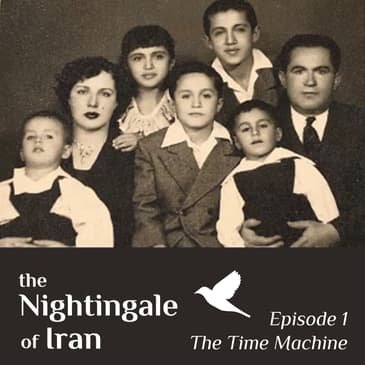
Danielle and Galeet grew up in a family band. They sang in 12 languages, but not Persian. This seems odd since their father and grandfather were famous Iranian singers. Then, they make a discovery.
~~~~~~~~~~~~~~~~~~~~~~~~~~~~~
You can find Indie Drop-In at https://indiedropin.com
Help Indie Drop-In support indie creators by buying us a coffee!
https://buymeacoffee.com/indiedropin
Brands can advertise on Indie Drop-In using Patreon
https://patreon.com/indiedropin
Twitter: https://twitter.com/indiedropin
Instagram: https://instagram.com/indiedropin
Facebook: https://facebook.com/indiedropin
Any advertising found in this episode is inserted by Indie Drop-In and not endorsed by the Creator.
If you would like to have your show featured, go to http://indiedropin.com/creators
~~~~~~
]]>
[00:00:00] Listener discretion is advised.
[00:00:02] Hello and welcome to True Crime, the podcast that helps you find new emerging and undiscovered
[00:00:08] true crime podcasts.
[00:00:09] I'm Greg, the host and curator of True Crime.
[00:00:13] If you like today's episode, make sure to check out the episode description for links
[00:00:17] to subscribe.
[00:00:18] Alright, let's get this show started.
[00:00:20] Begin!
[00:00:21] Hello, Indie Drop-In True Crime listeners.
[00:00:24] My name is Ariel Nismlat and I am here to introduce a podcast that I think you're
[00:00:29] really going to enjoy.
[00:00:31] You are about to hear episode one of The Nightingale of Iran.
[00:00:35] It's not quite a true crime podcast, but I really think you're gonna enjoy it because
[00:00:40] it's about mystery and intrigue and family history and family lore and the mysterious
[00:00:45] circumstances that brought a famous Iranian family from Iran to the US where they were
[00:00:52] no longer famous, they were just a regular family.
[00:00:55] What made that happen?
[00:00:56] Let me tell you a bit more about it and then we'll hit play on that episode.
[00:01:00] The show takes place in the Golden Age for Jews in Iran.
[00:01:03] In the 1950s, there was a religious Jew, Yunus Dardashdi.
[00:01:06] He became a national celebrity, singing at the Shah's Palace and also on the radio.
[00:01:11] In the 60s, his son Fareed became a teen idol on TV.
[00:01:14] They were beloved by Iranian Muslims, but at the height of their fame they left
[00:01:18] the country.
[00:01:19] It was always a mystery to the host of the show, Danielle Dardashdi and her sister
[00:01:23] Aliyeh.
[00:01:24] Why did their family decide to leave Iran?
[00:01:26] Now, in this documentary podcast series, it's six episodes long, the sisters reveal painful
[00:01:31] secrets unspoken for generations.
[00:01:34] The Nightingale of Iran is a story that will resonate with outsiders everywhere.
[00:01:38] All six episodes are live now.
[00:01:40] We're about to hit play on the first episode of The Nightingale of Iran.
[00:01:44] If you like it, find it wherever you get your podcasts and binge all six episodes
[00:01:48] now.
[00:01:49] Enjoy!
[00:01:50] The Nightingale of Iran is brought to you by the Jewish Telegraphic Agency, covering
[00:01:55] stories of Jewish communities around the world since 1917.
[00:02:01] This is Episode One.
[00:02:14] I grew up in a family band.
[00:02:18] The Dardashdi family, a Jewish-American family band.
[00:02:27] Before my sisters and I were even born, our parents, Fareed and Sheila, sang as
[00:02:31] a duo.
[00:02:33] Then we joined the show.
[00:02:45] We performed all over the country, mostly synagogues and Jewish music festivals.
[00:02:50] This is a 1986 VHS recording, a show called A Dash of Dardashdi in Miami Beach, Florida.
[00:02:59] My dad is the headliner, a canter who sings opera, show tunes and international music.
[00:03:22] He's in a black and white tuxedo.
[00:03:31] My mom is a folk singer and guitarist.
[00:03:34] She, my sisters and I are wearing matching red skirts and shirts with white sashes
[00:03:40] around our waists.
[00:03:41] I'm 16 years old, Galita's 13, Michelle is 6.
[00:03:46] And we're all so enthusiastic and cute, singing and playing tambourines and other instruments.
[00:03:59] We sang folk music in 12 different languages.
[00:04:04] Yiddish, English, Hebrew, Ladino, Greek, French, Spanish.
[00:04:16] But I don't think we ever sang any songs in Persian.
[00:04:21] Which looking back seems weird to me since my dad is Persian and especially weird since
[00:04:28] he and my grandfather were both famous singers in Iran during the Golden Age for Jews there
[00:04:35] way before the Iranian Revolution.
[00:04:44] In the early 1960s, my father was a teen idol in Tehran singing pop music on TV.
[00:04:53] And his father, my grandfather, Yunus Der Deshti, was one of the most famous Iranian singers
[00:05:01] ever.
[00:05:02] A religious Jew who grew up in orphan in Tehran's Jewish ghetto, he became a beloved national
[00:05:21] celebrity in the 1950s and 60s.
[00:05:25] He sang at the Shah's Palace and fans packed into concert halls to hear him sing.
[00:05:41] It was his weekly primetime show on Iranian national radio that made him a household name.
[00:05:48] It was before TV when there was only one radio station in Iran and only a few hours of programming
[00:05:56] a day.
[00:05:57] People all over the country, Muslims, Jews, everyone stopped what they were doing when
[00:06:03] his show came on.
[00:06:12] I would be going in the street to see a whole bunch of people standing in front of like
[00:06:15] a coffee house.
[00:06:16] So what's happening over here?
[00:06:18] Deshti is singing.
[00:06:21] In our house it was like a curfew.
[00:06:24] Nobody was supposed to talk or make noise.
[00:06:29] They should be quiet because Mr. Der Deshti was singing.
[00:06:34] The power of his voice was so incredible that they had called him the Nightingale of Iran.
[00:06:59] But at the height of their fame, the whole family left Iran and I could never understand
[00:07:05] why.
[00:07:06] All my life I've heard stories about how wonderful life was during this time in
[00:07:11] Iran.
[00:07:12] How the new king, Mohammed Reza Palavi, was turning Tehran into Paris.
[00:07:19] The Jews were flourishing from the 40s, 50s under the reign of the late Shah.
[00:07:26] He was educated in back in Europe and he was a very liberal man.
[00:07:31] It was the golden era for the Iranian Jews at the time.
[00:07:35] It was a beautiful period for Jews, for women in Iran.
[00:07:42] And all my life it made me mad hearing my dad and other older Jewish Persians waxing poetic
[00:07:49] about how great the Shah was.
[00:07:52] Calling it a golden age I felt like I was only getting part of the story because if
[00:07:58] everything was so great why did our family leave?
[00:08:03] If Jews were flourishing, our grandfather was the voice of Iran and our family was so
[00:08:09] steeped in Persian Jewish culture for hundreds of years why did they leave everything behind?
[00:08:16] Give up their fame and success and raise us to be so un-Persian.
[00:08:23] It never made sense to me until now.
[00:08:35] This is the Nightingale of Iran, an audio documentary about identity, belonging and music.
[00:08:44] I'm Danielle Dardashti, a storyteller, author and documentarian.
[00:08:54] I'm teaming up with my sister Ghalid Dardashti to create this podcast series.
[00:08:59] She's an anthropologist of Middle Eastern Jewish culture and a musician.
[00:09:04] The story isn't that simple.
[00:09:08] It's like not romanticizing what it was like in Iran.
[00:09:14] We want to understand why our famous family left Iran during the golden age for Jews there.
[00:09:23] Why they abandoned their Iranian identity.
[00:09:31] Recordings of our grandfather on the radio were destroyed by the Islamic Revolution.
[00:09:35] Our family's story erased and we can't travel to Iran.
[00:09:43] So we need to find another way in, deep under the surface.
[00:09:48] We want to know what really happened.
[00:09:54] Ghalid and I are determined to bring our family's story and their voices back to life.
[00:10:06] This is Episode 1, The Time Machine.
[00:10:31] Ghalid and I are in my living room in White Plains, New York talking about identity.
[00:10:36] How who you are, who you feel like you are and who other people think you are can be
[00:10:42] three totally different things.
[00:10:45] Ghalid is a performer but in our family she's the middle child.
[00:10:50] People often don't see her the way she sees herself.
[00:10:53] Yeah, when people meet me and I tell them, oh yeah I'm the quietest person in
[00:10:58] my family they're very scared.
[00:11:00] They don't want to meet the rest of my family.
[00:11:04] Yeah they just can't imagine that.
[00:11:07] And most people in America, Jewish or non-Jewish, think Jews are just all one kind.
[00:11:14] The whitest kind, Ashkenazi.
[00:11:17] Around two thirds of Jews in the US are that kind of Jewish.
[00:11:21] But the other third is made up of Sephardic Jews with roots in Spain or Mizrachi Jews
[00:11:27] from the Middle East and North Africa who can look very similar to Arabs.
[00:11:32] Also there are Jews who are black, Asian, Hispanic, even Native American.
[00:11:37] But since these kinds of Jews are rarely represented in mainstream media
[00:11:42] many people don't know they exist.
[00:11:45] Ghalid and I are mixed.
[00:11:47] Our mom's side is Eastern European Ashkenazi from Poland and Russia
[00:11:52] and our dad's side is Persian.
[00:11:54] But most people assume I'm plain old Ashkenazi
[00:11:58] because they aren't aware of any other kind of Jewish.
[00:12:01] A lot of people who will be listening to this podcast
[00:12:06] probably don't even know that I'm Persian.
[00:12:10] It's like weird how this is like a big part of me in a way, however...
[00:12:18] Yeah I totally agree.
[00:12:20] Ghalid doesn't usually identify as Mizrachi
[00:12:23] because she says the term historically meant Jews who immigrated to Israel
[00:12:28] from the Middle East and North Africa.
[00:12:30] She's an expert on this stuff and a stickler.
[00:12:33] And because Ghalid's work focuses on Middle Eastern Jewish culture
[00:12:37] people assume she grew up super Persian.
[00:12:41] A lot of people think I'm very Persian
[00:12:46] and are going to be surprised to hear that I grew up
[00:12:50] without any Persian identity at all.
[00:12:53] Like people ask me all the time like how do Persian Jews do this or that?
[00:13:00] It's been my journey to try to kind of connect with this part of my heritage
[00:13:09] with this part of my background that we didn't grow up with.
[00:13:14] We don't speak Persian and as kids we hardly knew any Jewish Persian customs
[00:13:20] like the tradition of singing the prayer Mizmah or Ladavide at the dinner table on Shabbat.
[00:13:25] No I don't remember ever doing Mizmah or Ladavide growing up.
[00:13:29] I don't think we did.
[00:13:30] I don't remember it either.
[00:13:31] Our Persian father is the more religious one.
[00:13:34] Our Ashkenazi mom is much more secular
[00:13:38] but still we weren't brought up doing our Jewish stuff the Persian way.
[00:13:43] The only thing he would do was
[00:13:52] Is that Persian?
[00:13:54] Yeah.
[00:13:54] It has like quarter tons in it.
[00:13:57] He always did do that right before the Hamotsi.
[00:14:04] And the names our family uses for parents and grandparents
[00:14:08] changed a lot over a generation.
[00:14:10] In Iran my dad called his parents Mamon and Papa.
[00:14:14] We called them Safdan Saba the Hebrew words for grandma and grandpa
[00:14:19] and we call our parents Mommy and Daddy the names our mom used for her parents.
[00:14:31] Our family band was a long time ago but man
[00:14:35] we managed to appropriate a lot of languages French Italian even Japanese.
[00:14:42] Odd that I can't remember anything we did in Persian.
[00:14:45] Like we didn't ever sing any Persian songs in any of our concerts.
[00:14:50] Am I wrong?
[00:14:51] Like no you're not wrong.
[00:14:56] Ghalit and I can't believe we never questioned this before.
[00:14:59] It's never even come up in conversation.
[00:15:02] And we're a family that talks a lot almost nothing is off limits.
[00:15:07] So maybe why we didn't sing in Persian is a touchy subject.
[00:15:12] Ghalit said let's just ask them.
[00:15:15] I would like to know from Daddy why in his opinion I mean it'll be whatever
[00:15:21] his answer is going to be it'll be interesting.
[00:15:24] I wonder if we'll be satisfied by the answer.
[00:15:26] He might not be.
[00:15:34] For most of the year we all live near each other in New York
[00:15:37] but our parents are retired and spend winters down in Delray Beach Florida.
[00:15:42] The son of the nightingale is a snowbird.
[00:15:45] It was wintertime so Ghalit and I asked if they could jump on a zoom call with us.
[00:15:51] Hi.
[00:15:52] Hi.
[00:15:53] Is mommy joining?
[00:15:55] Let me see if I can get this thing to be the...
[00:15:57] Hi mom.
[00:15:58] Hi.
[00:16:00] First we caught up a little.
[00:16:01] She might go out with my friend Daddy's grandson.
[00:16:06] What?
[00:16:07] On like a date?
[00:16:08] Well they might get together for a walk or something.
[00:16:12] Then we got to our burning question.
[00:16:15] How come we never sang any Persian songs as a family?
[00:16:23] I'll tell you why.
[00:16:25] Our mom made it sound like she was about to reveal a big secret but she's just really dramatic.
[00:16:33] Wanted you to learn Hebrew, wanted to learn English
[00:16:37] and then we sang a lot of different languages for me like you know Farsi.
[00:16:40] Oh I know Farsi anyway if I was in Greek that was special.
[00:16:44] If I sang something in Spanish something you know what I mean.
[00:16:48] Seemed like it never occurred to them either that we didn't sing in Persian.
[00:16:53] Was it a decision you made that like our family shows we would not have any Persian or...
[00:17:00] It was just...
[00:17:01] Whatever it came easy.
[00:17:03] They said before we were born they did sing some Persian songs as a duo.
[00:17:08] Daddy and I sang masto, masto, masto when we used to sing alone
[00:17:13] and then we sang Azizam.
[00:17:15] We learned that from you know where?
[00:17:19] Should I tell you?
[00:17:20] It's from a theater Bekel record with Ghi'u-la-Gil.
[00:17:24] I've never heard it in Iran.
[00:17:26] Never heard it.
[00:17:27] It's possible that it wasn't even Iranian it was Afghani.
[00:17:32] That masto and Azizam were the only two Persian songs.
[00:17:35] The only two Persian songs I ever sang.
[00:17:37] And one of them you didn't even learn from daddy.
[00:17:41] I taught it to daddy.
[00:17:43] Our American Ashkenazi mom taught Persian songs to our Iranian dad.
[00:17:51] Galit tried to get them to clarify.
[00:17:54] You think that maybe the rhythms and the melodies were too difficult for...
[00:17:59] They were too foreign!
[00:18:01] More foreign than the songs we did in Ladino and Yiddish and Greek and Japanese?
[00:18:07] I kept pressing.
[00:18:09] So wait mom when you say they were too foreign
[00:18:14] and that's why we didn't do the Persian songs in the family band.
[00:18:19] Were they too foreign for you or were they too foreign for you too dad?
[00:18:25] No it was just for mommy.
[00:18:27] I couldn't play those on the guitar.
[00:18:30] Some of them you needed like a Persian band or really somebody who was a very good
[00:18:34] Persian musician like pianist who could do those things.
[00:18:39] So we were more interested in doing international.
[00:18:41] So one or two Persian songs was enough because we did one in Spanish, we did one in Greek.
[00:18:47] We did one Azizam.
[00:18:49] No we didn't never sang Azizam.
[00:18:51] We did a family show there was never one Persian song in our show.
[00:18:56] I never ever did a concert with you where you sang Azizam or Mastom Mastom.
[00:19:03] Right.
[00:19:03] It's Mastom.
[00:19:04] It means I'm drunk I'm drunk I'm drunk.
[00:19:07] You're listening to an episode of The Nightingale of Iran on True Crime by Indie Dropin.
[00:19:13] We're going to take a quick break and now back to this episode of The Nightingale of Iran.
[00:19:20] It started to feel like Ghalid and I were interrogating our parents
[00:19:24] but their answers about meeting Persian musicians were too technical and missing the point.
[00:19:30] We were trying to figure out whether our dad ever wanted us to sing Persian music.
[00:19:36] It seemed like our mom kind of wished we had.
[00:19:39] That would have been nice let's go back and do it.
[00:19:45] Okay yeah she was joking but going back in time would be a really convenient way to solve the
[00:19:52] family mysteries like why they left Iran in the first place.
[00:19:57] My dad said if he could travel back in time he'd want to see his parents.
[00:20:03] Safda died 23 years ago
[00:20:06] and Saba has been gone 31 years.
[00:20:09] He misses them a lot.
[00:20:11] Misses the way Saba told jokes.
[00:20:14] Laughing all the way through the punchline.
[00:20:18] I wish I would have taped it that would have been the most beautiful thing to record him
[00:20:22] telling a joke and laughing at the same time.
[00:20:24] It was the cutest thing in the world.
[00:20:27] Oh god he loved him so much.
[00:20:31] But what if I told you I found a time machine because I did.
[00:20:49] Here's what happened.
[00:20:51] There was construction going on at my house
[00:20:55] and since my parents were down in Florida
[00:20:57] my husband and I were staying at my parents house in New Rochelle.
[00:21:02] One day I was doing laundry in their basement
[00:21:05] and I made an insane discovery.
[00:21:09] Boxes and boxes of audio tapes like hundreds of tapes recorded over decades
[00:21:16] beginning in the 1960s when my dad left Iran to go to college in the U.S.
[00:21:22] Back then long distance phone calls were really expensive
[00:21:26] same with flights so my dad communicated with his family in Iran
[00:21:31] by sending audio tapes back and forth across oceans.
[00:21:36] I alerted Galit about my discovery and she came over to see it.
[00:21:41] Okay in the basement
[00:21:46] okay right here there seems to be like a big stash.
[00:21:50] The tapes from the 60s are these big bulky gray reels
[00:21:55] I've never seen anyone use in my lifetime
[00:21:58] they look like those old real-to-real kind of movies.
[00:22:02] Oh my god wait that looks good.
[00:22:04] It looks more old.
[00:22:06] Just based on the writing.
[00:22:08] Looks worse.
[00:22:08] Yeah it's like judging wine by the label of the wine bottle.
[00:22:13] Yeah it looks worse.
[00:22:15] The ones from the 70s are cassettes
[00:22:18] and from the 80s and beyond it's a mix of cassette and VHS.
[00:22:23] What happened?
[00:22:23] Bug.
[00:22:24] Ew.
[00:22:24] Dead bug.
[00:22:26] Um
[00:22:26] Are you recording this?
[00:22:27] Yeah.
[00:22:31] We got all the tapes converted to digital and started listening.
[00:22:51] Tonight we will go with my parents to do a show in a bungalow colony.
[00:22:57] You should hear Sarit sing in Yiddish.
[00:23:00] As they say in Yiddish and Hebrew he has a lot of fame.
[00:23:06] Farid has been writing about you in his letters to me
[00:23:11] and has told me that you are a good family
[00:23:15] and has been very kind to him.
[00:23:18] Each tape is like a two hour voice memo.
[00:23:21] They're talking about what's going on in their lives,
[00:23:24] recording family celebrations
[00:23:26] and there's so much music.
[00:23:34] Here's my mom and dad singing as a duo in New York in 1965
[00:23:39] when they just started dating
[00:23:47] and something I thought I'd never hear.
[00:23:50] Sabah's radio show just like it sounded on the air in 1963 Iran
[00:24:06] Official recordings disappeared during the revolution
[00:24:09] but these homemade tapes have been down there
[00:24:13] in the basement all this time.
[00:24:16] My dad's siblings recorded it for him straight off the radio.
[00:24:28] Why didn't our father ever tell us about these tapes?
[00:24:31] He said he wanted to hear Sabah telling jokes again
[00:24:34] and lo and behold here are tapes of Sabah telling jokes.
[00:24:45] Safda asked if my dad got the punchline.
[00:24:48] They were making this tape for him
[00:24:50] because they knew he'd love to hear it.
[00:24:53] He was so far away.
[00:24:58] And all this time these memories have been so close by
[00:25:03] right next to the laundry room buried in boxes in the basement.
[00:25:07] I got a telephone today.
[00:25:14] I don't have a phone.
[00:25:20] And now here I am, a visitor from the future
[00:25:25] listening in like a fly on the wall time traveling.
[00:25:30] I am missing you pretty much.
[00:25:38] 1959 Tehran, the oldest recording of Sabah I've ever heard.
[00:25:58] 1968 New York City my mom's dad grandpa Louis saying hello to his new son-in-law's family.
[00:26:07] In America and let's hope that in the near future
[00:26:12] we will be able to meet you in person so that it wouldn't be so hard to communicate with the tapes.
[00:26:21] Shalom, may it draw.
[00:26:28] 1963 Tehran this is so crazy for me to hear.
[00:26:33] It's my uncle Yadid who's lived in New Jersey for the last 50 years first learning to speak English as a teenager.
[00:26:43] I am Yadid and many thanks for taking care of Fari.
[00:26:48] Excuse me for I don't know very good to speak English.
[00:26:55] That's all goodbye.
[00:26:57] And my uncle Hamid who lives in Florida at 11 years old singing a patriotic Iranian song.
[00:27:19] My mom dad and uncle David goofing around like kids.
[00:27:24] Ladies and gentlemen, Nazavid and I and Sheila are going to sing a song for you.
[00:27:27] It's called Bunga Bunga Bungalow as we wrote ourselves.
[00:27:30] Are you ready?
[00:27:31] One two.
[00:27:38] The tapes are unbelievable.
[00:27:41] Hilarious so moving.
[00:27:44] I feel like a little kid who accidentally stumbled on a secret drawer where my parents keep all their deepest darkest secrets.
[00:27:53] Like I'm rummaging through something that doesn't belong to me listening in on private conversations.
[00:28:01] I'm shocked at how clearly I can hear all these voices from the past.
[00:28:06] My young parents, my grandparents, my great-grandparents on my mom's side.
[00:28:12] This is Raim Grampa.
[00:28:15] And oh my god as a little kid I had a thick New York accent.
[00:28:22] Who is this little bad boy running after doing a blank?
[00:28:26] I am a little bad boy running after doing a blank.
[00:28:32] I have a thing for finding treasure, a wooden chair on the side of the road, pebbles on the beach,
[00:28:39] bringing them home, turning them into something new.
[00:28:43] But this it's beyond any treasure I've ever found.
[00:28:48] I come for the girl, the girl.
[00:28:54] The girl, the girl? Okay a little loud now so everybody can hear it.
[00:28:58] I come for the girl, the girl.
[00:29:02] I come for the girl, the girl.
[00:29:03] But I don't have the girl.
[00:29:05] I come for the girl.
[00:29:07] I have.
[00:29:40] I am going to say so long for now hoping to hear from you soon.
[00:29:47] Love Sheila.
[00:30:12] I'm thrilled by this discovery but also afraid of what I might find.
[00:30:21] Did my father keep the tapes hidden for a reason?
[00:30:25] Will it be painful for him that I'm going back there?
[00:30:28] A lot of it's in Persian and I don't understand all the words but I understand the emotion.
[00:30:39] It's like I'm sitting right there in the room with them,
[00:30:43] feeling the pain my father felt as a new immigrant 60 years ago, his sense of loss.
[00:30:55] And the excitement he felt, introducing his family to his new life in America.
[00:31:01] And now we're going to have for our second selection, it's going to be the trio.
[00:31:09] I pour through the tapes like a researcher with a microscope and new details come into focus.
[00:31:16] New layers of their lives that help Galid and I understand our family and ourselves.
[00:31:24] Twists in turns we never expected including a painful secret.
[00:31:34] It's very nuanced and weird and this is not something that I have ever heard daddy or
[00:31:42] any of our relatives talk about and so I would really like to hear this.
[00:31:46] I don't think daddy will admit to any of it.
[00:31:50] Come along with us as we travel through time and retrace our family's journey from Iran to Israel to America.
[00:31:59] India, America.
[00:32:11] The Nightingale of Iran a podcast about identity, belonging and music.
[00:32:42] The Nightingale of Iran is co-created and co-executive produced by me,
[00:32:47] Danielle Dardashti and my sister, Galit Dardashti.
[00:32:51] This was episode one, The Time Machine.
[00:32:56] I'm the host writer director and senior producer.
[00:32:59] Galit is the producer subject matter expert and musical director.
[00:33:04] Our theme song Melech is from her album Monajat.
[00:33:08] Check it out wherever you get your music.
[00:33:15] Audio editing and sound design by Rebecca Seidel and Zachary Goldberg.
[00:33:21] Story editing by Ryder Alsop.
[00:33:24] Story consulting by Asal Eshanipur.
[00:33:30] Galit and I want to thank our extraordinary parents, Farid and Shila Dardashti for letting us
[00:33:37] interrogate them and also for never cleaning out their basement. We love you.
[00:33:47] In this episode you also heard from Shala Javdan,
[00:33:50] Homa Sarshar, Lily Kipur and Nahid Pirnazar.
[00:33:56] The Nightingale of Iran was developed with support from the Jewish Writers Initiative
[00:34:01] Digital Storytellers Lab, a project of the Maimonides Fund, Common Era,
[00:34:08] the UNESCORAIA Nazarian Family Foundation and the Hyman Brown Charitable Trust.
[00:34:16] Our non-profit fiscal sponsor is Beholah Shon.
[00:34:19] Our media partner is the Jewish Telegraphic Agency, a publication of 70 Faces Media.
[00:34:26] Our podcast marketing agency is Tink and we are distributed by PRX.
[00:34:34] If you want to know more about the Nightingale of Iran,
[00:34:37] get some bonus content, info about events and appearances
[00:34:41] and how you can support this project, please go to nightingaleofiran.com.
[00:35:32] Consider buying me a coffee. You can go to buymeacoffee.com forward slash indydropin.
[00:35:38] If you look at the very bottom of the episode description,
[00:35:41] I put a link in there to make it really easy.
[00:35:44] Indydropin has many other shows that you also might like.
[00:35:48] Just go to indydropin.com. See you next week!